
Pontiac Resident Lookup Records
A Pontiac resident lookup works best when each source answers a different question. Oakland County parcel and deed material can connect a name to a property interest, although an owner mailing address does not prove that a person lives there. Court indexes can surface a party name and case history. Vital and genealogy sources can test an event date or family connection. State business and license records can confirm a public professional or filing affiliation. The most useful result is a set of matching facts from separate custodians, not a single unverified hit.
| Record trail | What it can confirm | Local source | Access route |
|---|---|---|---|
| Parcel and tax record | Titled owner, situs, mailing address, PIN, and legal description | Oakland Property Gateway and Pontiac BS&A | Basic map/search; reports may cost |
| Recorded deed | Transfer parties, dates, reception or liber/page details, and legal description | Oakland Super Index | Online copies from January 1, 1964; older books at the office |
| Court party record | Case number, role, docket events, and available filings | Court Explorer | Public categories; copies and older-file access vary |
| Marriage or death lead | Event name, date, place, or an obituary lead | Oakland genealogy search | Free search where offered; certificates have a fee |
| License or entity filing | Public credential, status, registered office, or filing affiliation | Michigan LARA verification | Free verification; certified license verification is paid |
Start with the least ambiguous item. A Pontiac address or parcel identification number is stronger than a common surname. A court case number or a dated life event can also anchor the search. If the only lead is a name, preserve middle initials, former names, spelling variants, and the approximate time the person was connected to Pontiac. Then compare one address, date, relationship, or role against a second official record before moving on.
Verify a Pontiac Resident Lookup
Verification is a sequence, not a name search. Begin with a source that states what role the person has. Property information can identify a titled owner and a physical parcel. A deed can place that owner in a transfer. A court result can show a party role, while a death or marriage record may confirm a date or relationship. Pontiac records often contain old addresses, mailing addresses, or people with the same surname. Keep those roles separate instead of treating every result as proof of current residence.
- Write down the exact name, a middle initial if known, former or alternate names, an approximate age, and the known Pontiac or Oakland County connection.
- Use an address, PIN, case number, record number, or event date as the first anchor. In property material, compare the situs address with the legal description and the owner mailing address.
- Search public court or genealogy indexes using the exact and alternate name. Record the case number, event date, party role, or certificate-order detail rather than relying on a search-result title.
- Compare two independent fields, such as a directory address against a census household, a deed legal description against a parcel, or an obituary against a probate file.
- Ask the custodian for an official or certified copy when that level of proof is needed. The index itself may be incomplete, delayed, or restricted.
- Docket
- A court’s dated list of case actions, filings, orders, and events. It is not the same as the full court file.
- Index and image
- An index lists identifying fields that help locate a record. An image is the scanned document or record copy, which may have a fee or access limit.
- Certified copy
- A copy issued by the record custodian with certification. It is different from a search result, an informational printout, or an uncertified image.
Note: Record the source URL, record date, and search date so a later reader can tell what was verified and when.
Pontiac Court Lookup Records
For Oakland Circuit and Probate matters, Court Explorer offers separate Circuit and Probate paths. The public online portion reaches to the early 1990s for Circuit cases. Its page describes Circuit searches by business name, person’s last and first name, case number, party type, case year, and case type. Probate is described as case-number-only in the page text. Older Circuit or Probate files move to the Legal Records Division for in-person or mail access, and the Pontiac 50th District Court has its own local docket and clerk path.
| Search control | How it is used in Court Explorer |
|---|---|
| Court type | Select Circuit or Probate before searching. |
| Person’s name | Last and first name fields support Circuit searching; use variants carefully. |
| Case number | Use the listed YYYY-999999-AA form when known. |
| Advanced fields | Party type, case-year range, and case-type range help narrow a common name. |
See the Court Explorer search form before entering a name.
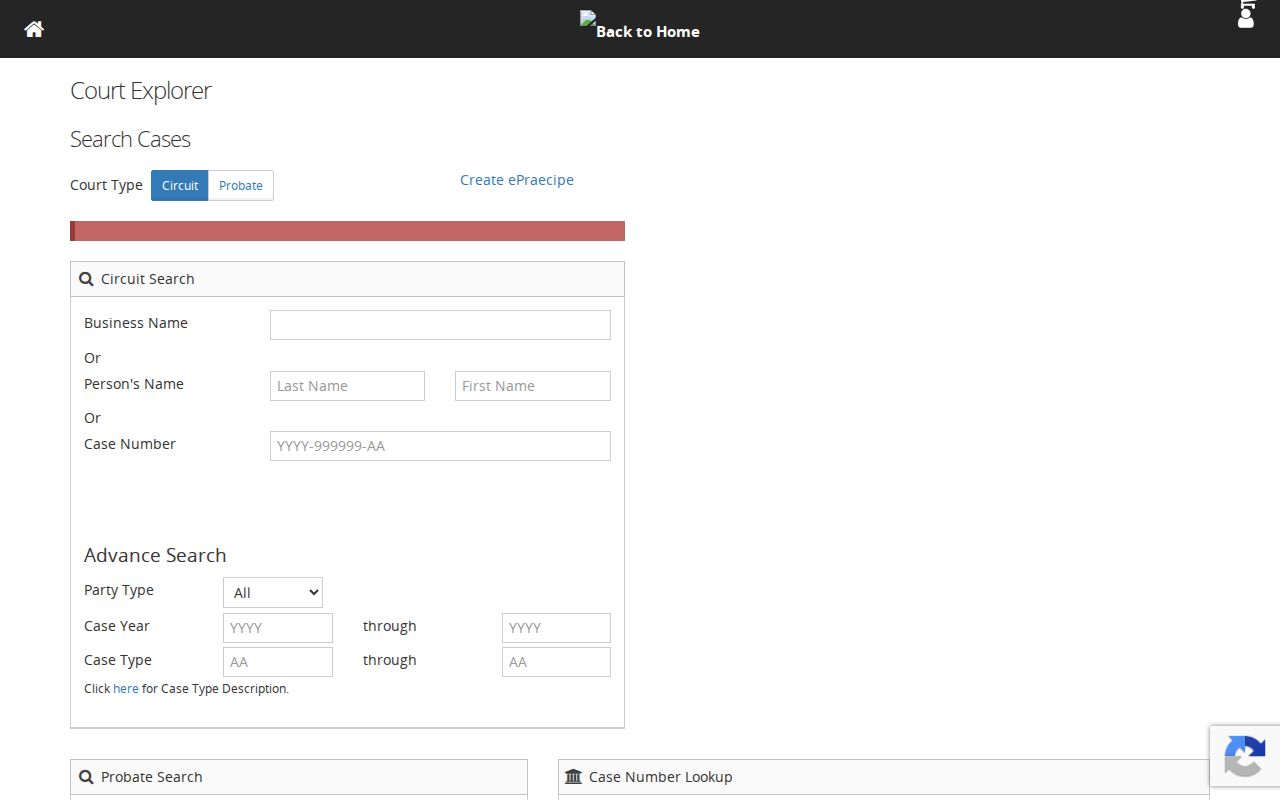
The screen is useful for narrowing a person to a case number and party role. It does not replace the official court record. PPO, juvenile, and Probate mental-health matters are not available there, and other case information may be restricted. Regular copies are listed at $1 per page; certified copies are listed at $10 per case number plus $1 per page, with the custodian handling delivery and certification.
A court result commonly identifies the case number, parties and attorneys, court type, register-of-actions events, filing or order dates, and any available action or disposition text. It may offer document purchase, email or mail delivery, and certification options. Do not treat a missing result as proof that no file exists. MiCOURT Case Search is a statewide informational fallback, while the clerk is the route for an official copy or an older Oakland file.
Pontiac Vital Lookup Paths
Death and marriage research can help separate people with the same name. Oakland County’s genealogy service offers free searches and certificate ordering. Its online marriage records may reach to 1868 and death records may reach to 1900, while older archived marriage and death material requires contact with the county office. The Oakland County Clerk/Register of Deeds Vital Records counter is at 1200 N. Telegraph, Department 413, Pontiac, with county copies listed at $15 for the first copy and $5 for each additional copy of the same record.
For statewide events, Michigan Vital Records provides mail, authorized VitalChek online, phone, drop-box, and appointment channels. Death, marriage, and divorce requests have different access rules from birth records. Under MCL 333.2882, a birth record less than 100 years old is limited to eligible requesters, while a birth record at least 100 years old is generally open unless sealed. Verify current processing estimates and fees with the state before ordering.
Use the state order page to check the required product and application route.
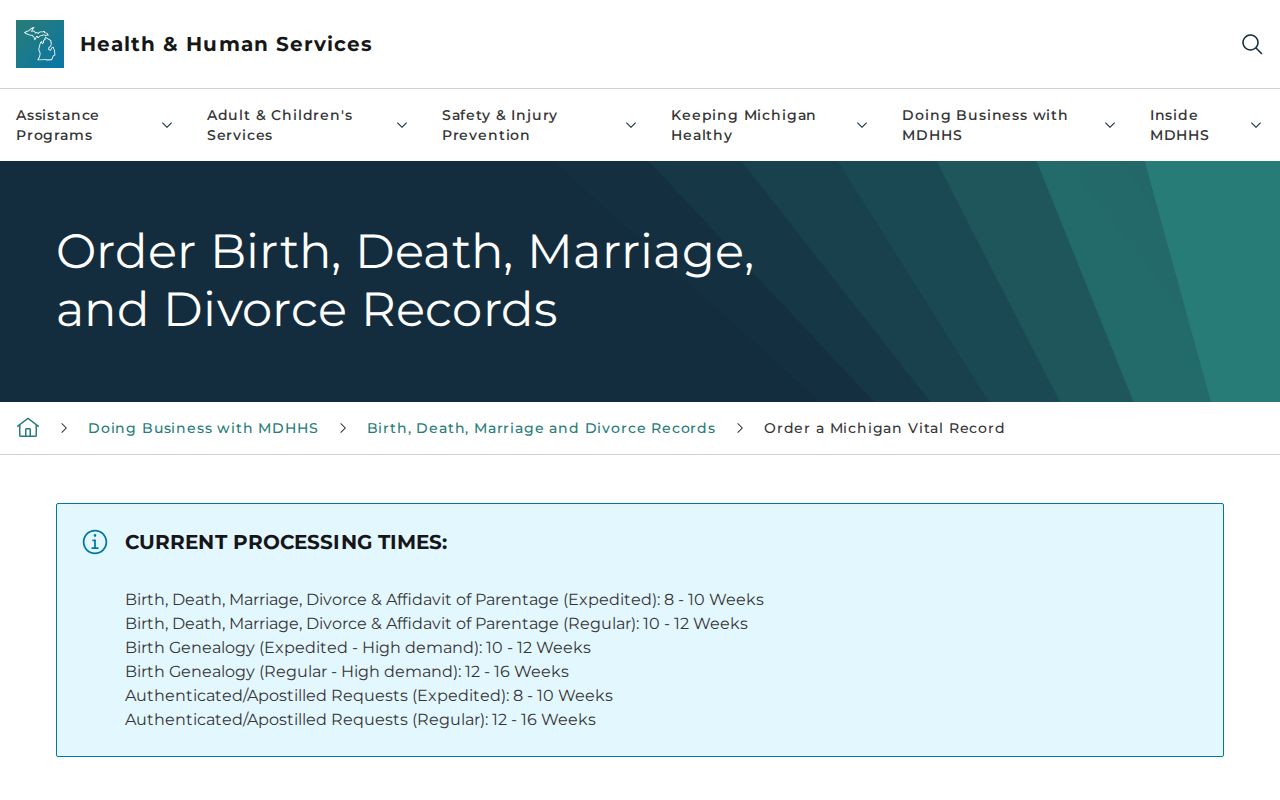
A verification document may provide basic identity, date, place, and filing facts without reproducing every field of a certified image. Fees are nonrefundable even when a record is not found. For an obituary lead, Pontiac Public Library can search a date-specific microfilm request for $3 when supplied with a narrow date window and a brief description.
Pontiac Voter Lookup Limits
Michigan.gov/Vote lets a voter check their own registration status, voter information, and local clerk information. It is not a public name-and-street directory. Michigan does not register voters by party, and ballot choices are never public. A formal Qualified Voter File request uses the state form and can select a jurisdiction, county, district, ward, or precinct scope. The form also specifies delivery choices such as pickup, FTP, or mail, rather than ordinary email delivery of a full file.
Full QVF access is controlled by Michigan Election Law and redaction rules. Driver or state ID numbers, month and day of birth, phone numbers, email, signatures, SSN4, and protected addresses are withheld. The form’s geographic options do not turn a self-service check into a casual person list. The research identifies submission by email to MDOS-FOIA@Michigan.gov or by mail to the Bureau of Elections, PO Box 20126, Lansing, MI 48901-0726. Confirm the current fee and respect protected voter and Address Confidentiality Program records.
The Michigan.gov/Vote self-check is the proper public starting point for a voter’s own record.
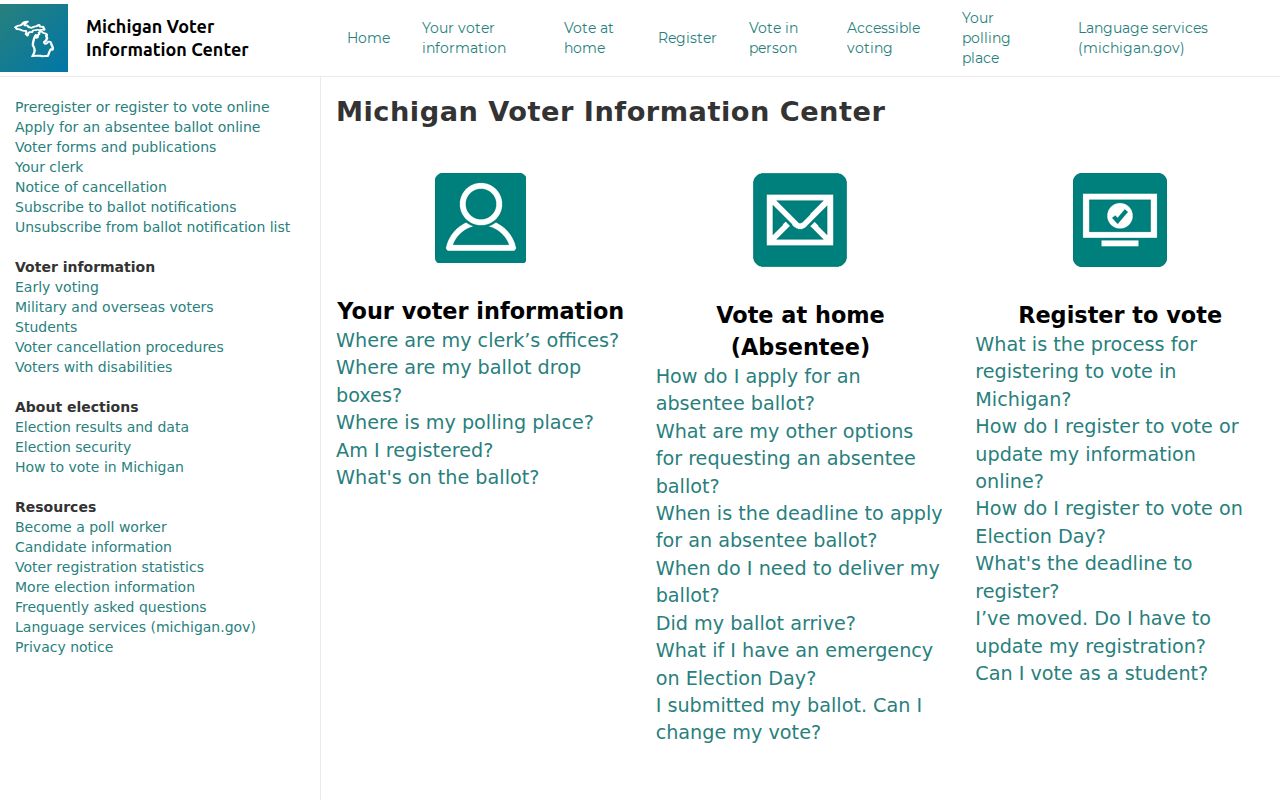
Use a voter result as a limited, dated record. A voter may have moved, used a separate mailing address, or have a protected record. The result does not establish physical presence at a Pontiac address on the day it is viewed.
Pontiac License Lookup Checks
A professional license or business filing can confirm a public affiliation, but not a private home address. Michigan LARA’s current business-entity portal can show entity status, registered office or agent, and filings. Oakland County assumed names and co-partnerships are also a county clerk service. These records help distinguish a public business role from a personal identity. A registered agent or office should never be assumed to be the individual’s residence.
MiPLUS license verification offers a free search and lists record number, record type, status, expiration date, and name in its records view. The research material lists a $15 certified verification route. Search by record number when one is known, or use the record-type and date fields to reduce a broad result. A discipline tab or public enforcement record can add context, but it still needs confirmation from the agency that holds the underlying file.
The Michigan license-verification page leads to the current official search path.
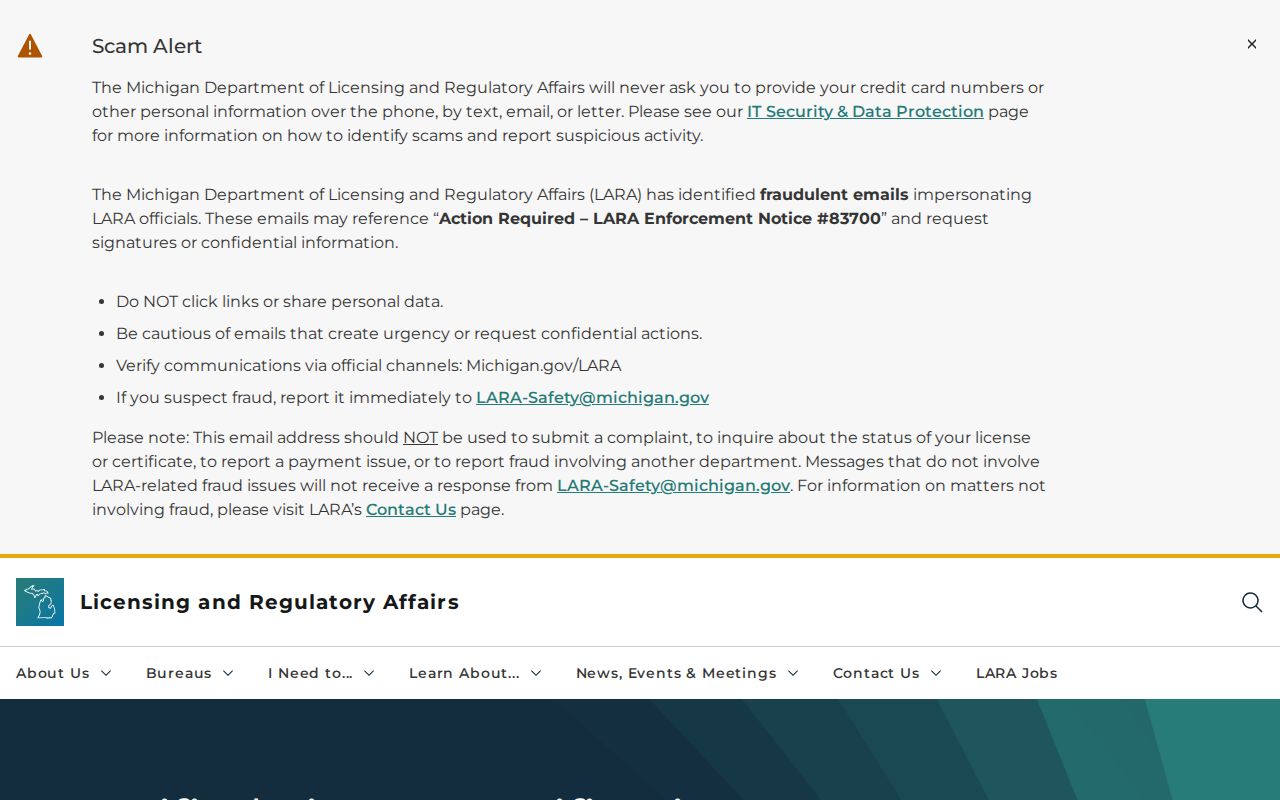
License status and a credential number can be useful comparison fields when names repeat. They do not prove that the licensee currently lives in Pontiac.
Pontiac Adoption Lookup Path
Michigan’s Central Adoption Registry and Confidential Intermediary services are the official route for an adult adoptee seeking an eligible birth-parent connection. This is not an ordinary birth-index search. The research identifies an adult-adoptee request that requires identification, a $34 fee, and details such as birth or adoptive names, date of birth, and adoptive parents. Original birth certificates remain sealed within the adoption process, so a common-name search cannot bypass those rules.
The human purpose matters here. A person seeking family history or a lawful reconnection should use the state program, complete the required forms, and allow the agency to apply its eligibility and consent rules. For historical genealogy, Library of Michigan vital-record research is the separate path for older material that has met its statutory transfer or opening period.
Pontiac Official Search Scopes
Some official person indexes have narrow purposes and should stay that way. The Michigan Sex Offender Registry offers name, address, and map-radius modes with statutory exclusions. Oakland County Jail information concerns local custody and may be up to 72 hours out of date. MDOC OTIS covers the state-supervision population, not every county jail or unsentenced person. Each system has a different population, date range, and correction process. A resident lookup should never merge these scope-limited sources into a general claim about a person.
Use the Michigan registry search only for the purpose and results it publishes.
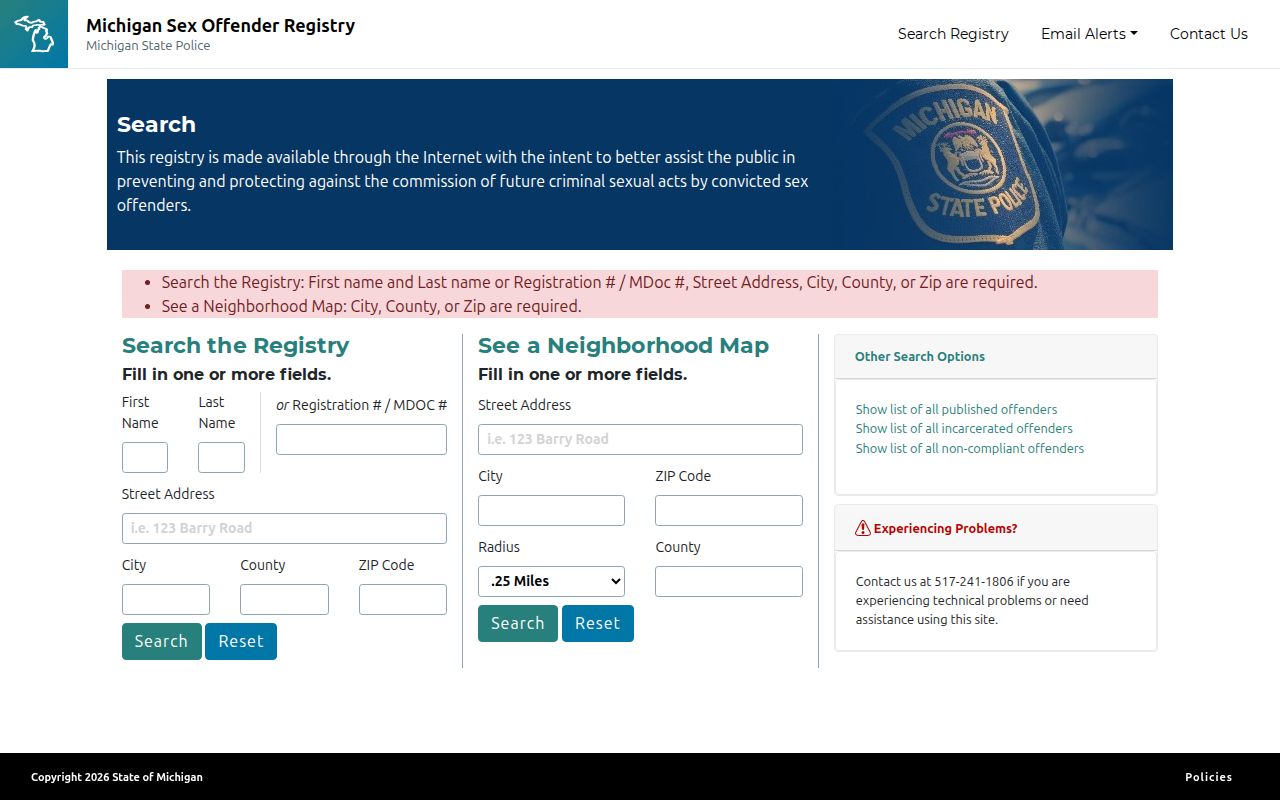
The official interface shows why scope matters: its controls are built for a registry search, not for verifying a Pontiac household. When identity is important, return to the record custodian and compare a second lawful source.
Pontiac Resident Lookup Limits
Pontiac resident research has real privacy boundaries. Michigan’s Address Confidentiality Program gives qualifying survivors a substitute address and mail-forwarding service. Protected voter and address-confidential data are withheld. Driver-license information is restricted by the federal Driver’s Privacy Protection Act, and utility customer information is not a public resident directory. Court, vital, juvenile, adoption, and mental-health records can also be sealed or limited. If an online record ends, the appropriate next step may be a narrow request to the custodian, an archive inquiry, or no access at all. Under the Michigan Freedom of Information Act, MCL 15.231 et seq., a public body generally has five business days to respond, with a possible ten-business-day extension.
Michigan’s Address Confidentiality Program is for qualifying survivors of domestic violence, sexual assault, stalking, human trafficking, or threat of harm. It is not a public-record shortcut. If an official record needs correction or redaction, contact the agency that maintains it rather than copying personal details into another place.
Lawful use. Use Pontiac records for personal, lawful research, family history, estate matters, or civic curiosity. Using information to stalk, harass, intimidate, or harm another person is prohibited.